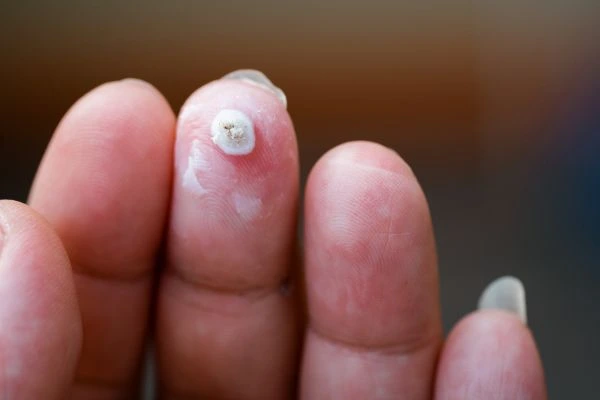
If you’ve had a wart for months, perhaps even years, you may be wondering how long it would take to remove it. You might have already tried something from the pharmacy, only to find the wart is still there.
The answer depends on the wart itself and the treatment being used.
With CryoPen, the freezing application may take only seconds. However, the skin needs time to respond afterwards, and some warts require more than one treatment.
At LA LIPO, we offer mobile CryoPen treatment for suitable skin lesions, including certain warts. Here, we explain what happens during treatment, how long healing may take and why results can differ.
How Long Does CryoPen Wart Removal Take?
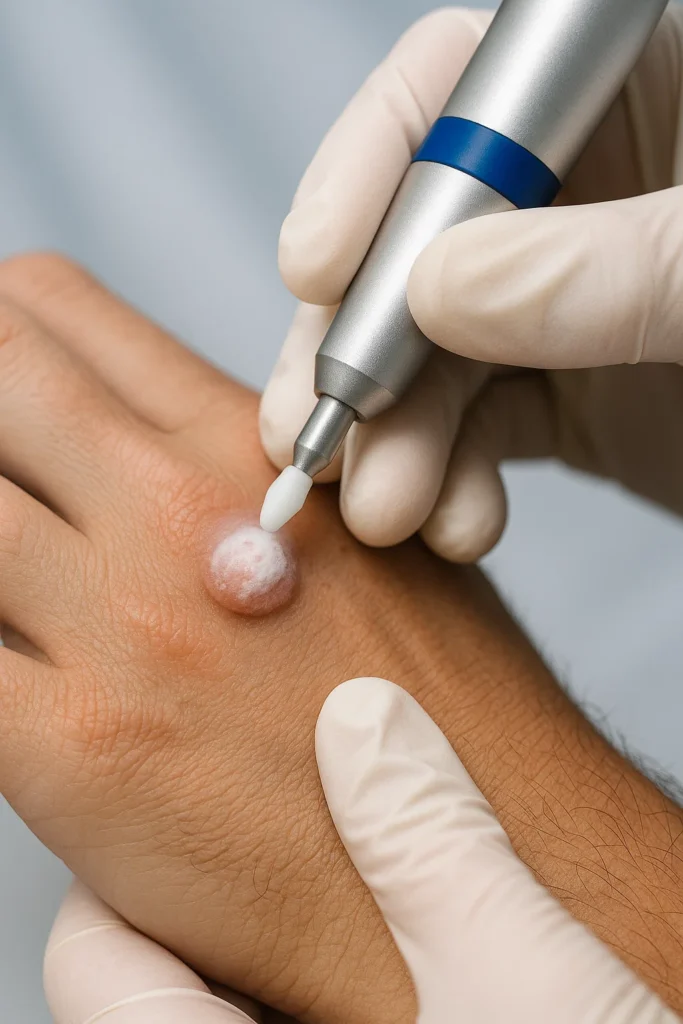
The freezing stage of a CryoPen treatment is usually brief, often lasting just a few seconds per application.
Your appointment will take longer because the practitioner needs to review the area, discuss your medical history, check suitability and explain the procedure and aftercare.
CryoPen uses a focused application of freezing gas to treat the affected tissue. Although the application is targeted, the surrounding skin can still be affected.
A single appointment may be sufficient for some warts, while others may need further treatment. There is no guaranteed number of sessions or clearance time.
What Happens After a Wart Is Frozen?
A wart doesn’t normally disappear as soon as it’s frozen.
Cryotherapy damages the treated tissue, which may then gradually break down as the skin heals.
You might notice changes in the following days, including redness, swelling, tenderness, or a blister. The treated skin may also become darker or develop a crust.
Over the following weeks, the affected tissue may gradually separate from the surrounding skin.
Not everyone experiences the same changes, and a wart may remain despite treatment.
Wart Removal Healing Timeline: What to Expect
There isn’t one fixed healing schedule, but the following gives an idea of how the skin may respond.
Immediately After Treatment
The area may look pale or white for a short time. Stinging, tenderness, or a burning sensation can occur during or after freezing.
During the First Few Days
Redness and swelling may develop. Some people experience blistering, while others notice only mild changes.
The area can feel sensitive, particularly if the wart is on a finger or a weight-bearing part of the foot.
Over the Following Weeks
A crust or scab may form as the treated skin heals. Some of the affected tissue may gradually come away.
Healing can take several weeks, and some areas take longer to settle.
When Is Further Treatment Considered?
Your practitioner should explain when they can review the area.
Further freezing may be considered if the wart remains, but only after assessing how the skin has responded and whether another session is appropriate.
The need for further treatment cannot always be predicted at the first appointment.
Will One CryoPen Treatment Remove a Wart?
Possibly, but not always.
Warts vary considerably in their size, thickness, location and response to freezing.
Some may clear following one treatment. Others persist despite repeated sessions, and recurrence is possible even after the wart is no longer visible.
Your practitioner can discuss the treatment options and limitations, but shouldn’t promise complete or permanent removal.
Why Do Some Warts Take Longer to Treat?
Several factors can affect how a wart responds.
Size and Thickness
Thicker warts may be more difficult to treat than smaller, superficial ones.
Location
A wart on the sole may be affected by repeated pressure from walking. Treatment in this area can also cause temporary discomfort.
Previous Treatments
If you’ve been using pharmacy wart treatments, tell your practitioner what you’ve tried and when you last applied them.
Irritated or damaged skin may need time to recover before you consider further treatment.
Individual Response
Two people with similar-looking warts can respond differently to cryotherapy.
This is one reason why an exact removal date cannot be guaranteed.
Does CryoPen Wart Removal Hurt?
Freezing a wart can be uncomfortable.
You may experience a sharp cold sensation, stinging or burning during treatment. Tenderness can continue afterwards, and blistering may cause additional discomfort.
Pain levels vary depending on the location and extent of treatment, as well as individual sensitivity.
Warts on the feet or around the nails may be particularly uncomfortable.
Your practitioner should explain what you might feel before proceeding.
What Are the Risks of CryoPen Wart Removal?
Cryotherapy can cause unwanted effects in addition to the intended damage to wart tissue.
Possible side effects and complications include:
- Pain, redness and swelling
- Blistering or crusting
- Bleeding or infection
- Changes in skin colour, including lighter or darker patches
- Scarring, which may be permanent
- Delayed healing
- Damage to surrounding healthy skin
- Incomplete wart removal or recurrence
Pigmentation changes may be more noticeable on darker skin tones and can sometimes persist.
Treatment close to nails can also cause nail changes or damage.
Risks depend on the area being treated, the freezing technique, and individual circumstances. Your practitioner should explain the relevant risks before treatment.
How Should You Care for Your Skin After Wart Removal?
Aftercare matters because the treated area may remain sensitive as it heals.
Your practitioner should provide instructions suited to the location and extent of treatment.
General advice may include:
- Keeping the treated area clean
- Avoiding picking or scratching blisters and scabs
- Protecting the area from unnecessary rubbing or pressure
- Following advice about dressings and washing
- Avoiding additional wart treatments until advised otherwise
Do not deliberately pierce a blister or pull away a scab.
Seek medical advice if you develop increasing pain, spreading redness, unusual warmth, pus, fever or other signs of infection.
Can You Return to Normal Activities After CryoPen Treatment?
This depends on where the wart has been treated and how your skin responds.
Some people can continue their usual activities without significant difficulty. Others may need to adjust activities that cause friction or pressure temporarily.
For example, a treated verruca on the sole may make walking or exercise uncomfortable.
Your practitioner can advise you about returning to work, exercise and other activities.
Can Warts Come Back After Cryotherapy?
Yes. Even when the visible wart clears, another wart may develop in the same area or elsewhere.
Certain types of human papillomavirus (HPV) cause warts. Cryotherapy treats the affected tissue but cannot guarantee that a wart will never return.
Avoid picking at warts and sharing towels, socks or other personal items that may have come into contact with affected skin.
Are There Alternatives to CryoPen Wart Removal?
Not every wart needs treatment.
Many warts eventually disappear without intervention, although this can take months or years.
For people who want treatment, options may include:
Pharmacy Treatments
Products containing salicylic acid are commonly used for warts and verrucas.
These usually require repeated application over several weeks and may not work for everyone.
Ask a pharmacist whether a product is suitable, particularly if you have another health condition or the wart is in a sensitive area.
Professional Cryotherapy
Freezing treatment may be offered by an appropriately trained healthcare professional or suitable treatment provider.
Different cryotherapy devices and freezing methods are available. Their treatment characteristics and supporting evidence may differ.
Medical or Podiatry Assessment
Large, painful, persistent or recurring warts may require assessment by a GP, dermatologist or podiatrist.
A healthcare professional can help determine whether another approach is more appropriate.
When Should You Have a Wart Checked by a Healthcare Professional?
Not every skin growth that resembles a wart is actually a wart.
Seek medical advice if a growth:
- Changes in colour, shape or size
- Bleeds without an obvious cause
- Becomes unusually painful
- Is particularly large or keeps returning
- Appears on your face or genital area
- Has not been confidently identified
- Looks infected
You should also seek medical advice before attempting treatment if you have diabetes, poor circulation, reduced sensation or a weakened immune system.
LA LIPO does not offer CryoPen treatment for genital warts.
If a lesion’s identity is uncertain, you need an appropriate medical assessment before considering cosmetic freezing.
Frequently Asked Questions About Wart Removal
1. How long does it take for a wart to disappear after freezing?
It may take several weeks for the treated tissue to change and the skin to heal. Some warts don’t clear after one treatment, and further sessions may be needed.
2. Does a wart fall off immediately after CryoPen treatment?
No. Freezing damages the treated tissue, but any subsequent changes usually happen gradually. A blister or scab may develop, although this doesn’t happen to everyone.
3. Can I shower after wart removal?
Your practitioner should provide instructions about washing and caring for the treated area. Avoid scrubbing or irritating the skin while it heals.
4. Is CryoPen suitable for verrucas?
Some verrucas may be considered for freezing treatment, but suitability depends on their location, appearance and your medical history. A podiatrist may be better placed to assess painful or persistent verrucas.
5. Is wart removal permanent?
No treatment can guarantee permanent clearance. Warts may recur or develop elsewhere, even after successful treatment.
6. How do I know whether CryoPen is right for me?
A suitability assessment is needed before treatment. The practitioner should consider the lesion’s appearance, location, relevant medical history and potential risks. Uncertain lesions require appropriate medical assessment.
Considering CryoPen Wart Removal with LA LIPO?
If a wart is causing discomfort or hasn’t responded to pharmacy treatments, you may be considering professional removal.
LA LIPO offers mobile CryoPen appointments for suitable lesions, allowing treatment to take place in your home where appropriate.
Before treatment, we’ll discuss the procedure, possible complications and what you can realistically expect. If the growth needs medical assessment or CryoPen is unsuitable, we should not proceed with treatment.
Contact LA LIPO to enquire about a wart removal consultation and discuss your options.
Important information: This article provides general information about warts and CryoPen cryotherapy. It is not intended to diagnose skin lesions or replace medical advice. Cryotherapy carries risks, including pain, blistering, infection, pigmentation changes, scarring and incomplete clearance. Results and healing times vary, and further treatment may be required. An appropriate healthcare professional should assess uncertain, changing or suspicious skin lesions before cosmetic treatment.