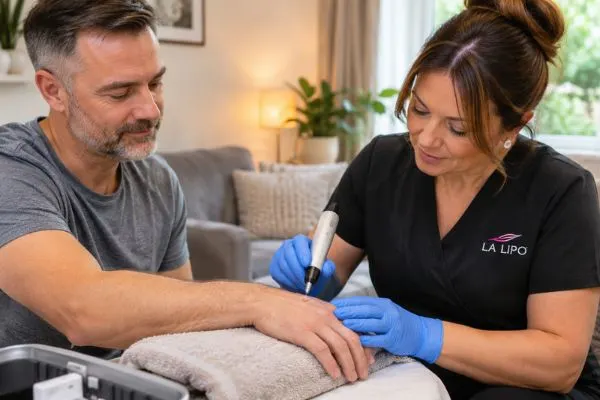
Wart Removal Oxfordshire at Home with CryoPen

Professional Wart Freezing Treatment | Mobile Appointments in Selected UK Areas

Warts are skin growths that can appear on the hands, fingers and other areas of the body. Although they’re usually harmless, some people choose to have them treated because they become uncomfortable, catch on clothing or don’t seem to go away.
At LA LIPO, we offer a mobile CryoPen service for suitable skin lesions, including certain common warts. Our practitioners visit customers at home in selected UK locations, allowing you to discuss the procedure and have your suitability assessed without travelling to a clinic.
CryoPen uses targeted freezing technology. Whether treatment is appropriate depends on the wart type, its location, your medical history, and the practitioner’s assessment.
Wart Removal Treatment 1

What Are Warts?

Warts are small skin growths caused by certain types of human papillomavirus (HPV). They can develop at almost any age and are particularly common on the hands and fingers.
Their appearance varies. Some have a rough, uneven surface, while others are flatter or grow in clusters.
Common types include:
  • Common warts: Often found on fingers, hands and around the nails, with a raised, rough surface.
  • Flat warts: Usually smaller and smoother, sometimes appearing in groups.
  • Plantar warts (verrucas): Develop on the soles of the feet and may become uncomfortable when walking.
Warts can spread through direct skin contact or contaminated surfaces, particularly when the skin is damaged.
Many disappear naturally over time, although this can take months or even years. Treatment isn’t always necessary.
If a growth is changing, bleeding, unusually painful, or you’re uncertain whether it’s a wart, arrange a medical assessment before considering removal.

How Does CryoPen Wart Removal Work?

CryoPen is a handheld device that delivers a controlled application of very cold gas to a targeted area of skin.
The freezing process is intended to damage the affected tissue. Over the following days or weeks, the treated area may blister, scab or gradually change as the skin heals.
Cryotherapy is one of several methods used to treat warts, but responses vary. Some warts need more than one treatment, and others may not respond as expected.
The practitioner will explain the procedure and assess whether the particular wart is suitable for the CryoPen equipment used by LA LIPO.
No treatment can guarantee complete or permanent wart removal.

Are There Any Risks or Side Effects?

Cryotherapy can cause temporary discomfort and visible skin changes.
Possible effects include:
  • Redness, swelling and tenderness
  • Blistering or scab formation
  • Temporary or lasting changes in skin pigmentation
  • Infection or delayed healing
  • Scarring
  • Incomplete removal or recurrence of the wart
Pigmentation changes may be more noticeable or persistent in darker skin tones.
Your LA LIPO practitioner will discuss the relevant risks before treatment so that you can make an informed decision.

Why Consider Wart Removal at Home?

Finding time for an appointment isn’t always convenient, particularly when you’re balancing work, family or other commitments.
LA LIPO provides home-based appointments in selected UK areas, subject to availability and suitability.

A familiar environment

Your consultation and any suitable treatment can take place in your home, with an appropriate, clean, well-lit area prepared for the procedure.

Individual assessment

Before proceeding, your practitioner will discuss the skin growth, relevant medical information and whether CryoPen is appropriate.

Clear treatment information

You’ll have an opportunity to ask questions about the procedure, possible discomfort, healing and whether further sessions might be necessary.

Aftercare guidance

Your LA LIPO practitioner will explain how to care for the treated skin and what changes to look out for during recovery.

What Happens During a CryoPen Wart Removal Appointment?

1. Consultation and suitability assessment

Your appointment begins with a discussion about the wart, including how long you’ve had it, whether it has changed and any previous treatment.
The practitioner will also review relevant health information and potential reasons why freezing may not be appropriate.
If the growth cannot be confidently identified as a suitable, previously assessed benign lesion, treatment should be postponed until appropriate medical assessment has taken place.

2. Preparing the area

If treatment is suitable, the practitioner will explain what is involved and prepare the skin.
The surrounding area will be considered carefully because freezing can also affect healthy skin.

3. Applying the CryoPen

The device is directed towards the wart for a period determined by the equipment instructions, treatment protocol, and the lesion’s characteristics.
You may notice a cold, stinging or burning sensation. Some areas are more sensitive than others, and discomfort can continue for a short time afterwards.

4. Aftercare and Recovery

Once the wart has been frozen, you might notice some redness, swelling or soreness around the treated area. It’s also quite normal for a blister to appear or for a small scab to form as the skin begins to heal.
Some areas take longer to recover than others, so there’s no set healing time. Try not to pick at any scabs or blisters, as this could increase the risk of infection or scarring.
Before leaving, your LA LIPO practitioner will talk you through caring for the area at home, including any changes that may need medical attention.

Is CryoPen Wart Removal Suitable for Everyone?

Not every wart should be treated with CryoPen, and not every skin growth that resembles a wart is harmless.
Suitability depends on several factors, including:
  • The wart’s location, size and appearance
  • Previous treatment and whether the growth has returned
  • Your skin’s healing response and relevant medical history
  • Conditions or medicines that may affect circulation, sensation or healing
  • The potential for pigmentation changes or scarring
People with diabetes, poor circulation, reduced sensation or weakened immune systems may need medical advice before treatment, particularly for lesions on the feet.
Warts on the face or genitals, or growths that bleed, change appearance or cannot be confidently identified, require appropriate medical assessment rather than routine cosmetic freezing.

How Long Does Wart Removal Take to Heal?

There isn’t one recovery time that applies to every wart.
Some people develop a blister shortly after freezing, while others notice a gradual change in the treated skin over the following days.
A scab may form and eventually separate as healing progresses. The process can take several weeks, depending on the area and how the skin responds.
Avoid picking at the treated skin, and follow the aftercare instructions provided.
If you develop increasing pain, spreading redness, discharge, fever or other signs of infection, seek medical advice.

Wart Removal at Home Across the UK

LA LIPO offers mobile appointments in selected areas of the UK.
Instead of travelling to a clinic, you can enquire about a home visit.
We will confirm appointment availability, treatment suitability, and any applicable charges before you decide whether to proceed.
 

Can Warts Come Back After Cryotherapy?

Yes. HPV causes warts, and freezing the visible growth doesn’t guarantee that it won’t return.
A wart may persist after treatment, recur in the same location or develop elsewhere.
Some people need additional sessions, while others may be better suited to a different treatment approach.
The practitioner should discuss what is reasonable to expect for your particular wart rather than promising a permanent result.

Wart Removal FAQs

Find answers to some of the most common questions about Cryopen, including how it works, what to expect, results and suitability.

CryoPen uses targeted freezing technology that may be suitable for treating certain common warts.
Cryotherapy is an established wart treatment, but outcomes depend on the lesion, the device, and the treatment technique. Complete removal cannot be guaranteed.
You may experience a sharp cold sensation, stinging or burning while the area is being frozen.
The skin can also feel tender afterwards. Discomfort varies by location and individual sensitivity.
Some warts respond to one treatment, while others need repeated sessions or a different approach.
Your practitioner can discuss the likely treatment plan after assessing the wart, although they can’t guarantee the number of sessions or the outcome.
LA LIPO offers home-based CryoPen appointments in selected UK locations.
Treatment is subject to availability, an appropriate home environment and an individual suitability assessment.
An appropriate healthcare professional should assess facial growths before treatment.
The face carries particular risks of scarring and pigmentation changes, and not every growth that looks like a wart is one.
LA LIPO should not treat an undiagnosed facial lesion as a routine wart.
Genital warts require assessment through a GP or sexual health service.
They should not be treated as part of a routine cosmetic wart removal appointment. A sexual health professional can advise on appropriate treatment and any related testing.
Cryotherapy is sometimes used for verrucas, which are warts on the soles of the feet.
However, plantar warts can be more difficult to treat, and freezing may cause discomfort when walking.
A podiatrist or other appropriate healthcare professional can advise on treatment options, particularly for large, persistent or painful verrucas.
For further information, see our Verruca Removal page.
No. Freezing doesn’t normally make a wart disappear during the appointment.
The treated skin may blister, scab or gradually change over the following days and weeks.
Some warts remain after the area has healed and may require further assessment.
Pharmacies sell treatments for certain common warts, including products containing salicylic acid and freezing preparations.
These can take time to work and may irritate the skin. They aren’t suitable for every person or every body area.
If you’re unsure what the growth is, or if it changes, bleeds or becomes painful, seek medical advice rather than treating it yourself.
Scarring is a possible risk of freezing treatment, although it doesn’t happen to everyone.
Blistering, changes in skin colour and delayed healing can also occur.
The practitioner should explain these risks before treatment, particularly for sensitive or highly visible areas.
Yes. Warts are caused by a virus that can spread through direct contact or contaminated surfaces.
Avoid picking or scratching them, wash your hands after touching them and don’t share personal items such as towels.
Covering warts when swimming can also help reduce the risk of transmission.
Yes. Even when the visible wart has cleared, another wart may develop in the same area or elsewhere.
Cryotherapy doesn’t guarantee that the underlying HPV infection has been eliminated.
Cryotherapy can sometimes cause lighter or darker patches of skin after treatment.
These changes may be more noticeable or longer-lasting in darker skin tones.
Your practitioner should discuss this possibility and whether freezing is appropriate for your skin and the wart’s location.
Diabetes can affect circulation, sensation and wound healing, particularly in the feet.
Seek appropriate medical advice before considering freezing treatment. A practitioner may decide that CryoPen is unsuitable or that specialist assessment is needed.
The cost depends on LA LIPO’s current pricing, the number of lesions being considered, and any additional appointments required.
Contact the team for a clear explanation of applicable treatment charges, deposits and any potential follow-up costs before booking.
Getting in touch is easy. Let LA LIPO know where you’re based and tell us a little about the wart you’re concerned about. We’ll check whether we cover your area and explain the next steps, including anything we need to know before arranging a home visit.

Important Information About Wart Removal

CryoPen treatment is not suitable for every wart or skin growth. A medical assessment may be necessary before removal, particularly if a lesion is changing, bleeding, unusually painful or has not been identified as benign.
Cryotherapy can cause discomfort, blistering, pigmentation changes and scarring. Results vary, and some warts may persist or return after treatment.
Treatment should only be carried out following an appropriate suitability assessment by a practitioner with the necessary training and competence. CryoPen is not a substitute for medical diagnosis or specialist care when these are needed.