

Pregnancy brings plenty of changes, and not all of them are immediately visible.
As your bump grows, your abdominal muscles gradually adapt too. They help support your back, pelvis, and everyday movements, so your stomach may feel different as pregnancy progresses.
You might feel a stretching sensation, find certain movements more difficult, or notice a ridge along the middle of your stomach when sitting up.
These changes are often part of pregnancy, but everyone experiences them differently.
In this guide, we’ll look at what happens to your abdominal muscles throughout pregnancy, explain diastasis recti and explore what recovery can look like after giving birth.
Understanding Your Abdominal Muscles During Pregnancy
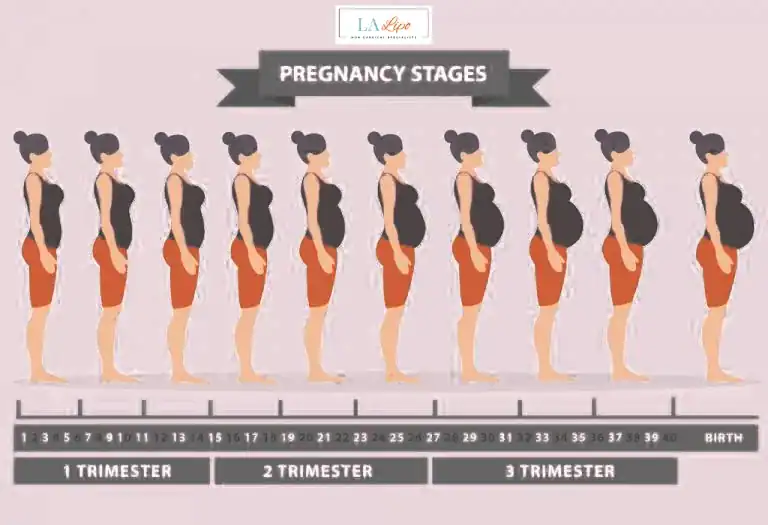
Your abdominal wall contains several muscle groups that work together to support movement and stability.
These include:
- Rectus abdominis: The pair of muscles running vertically down the front of your abdomen.
- Transverse abdominis: A deeper muscle layer that helps support your abdomen and trunk.
- Internal and external obliques: Muscles along the sides of your abdomen that assist with twisting, bending and stability.
The two sides of the rectus abdominis are joined by connective tissue called the linea alba.
As your uterus grows, your abdominal wall stretches to accommodate the pregnancy. The linea alba can widen, increasing the distance between the two rectus muscles.
This is commonly known as diastasis recti, or abdominal muscle separation.
It’s a common change during pregnancy and doesn’t automatically mean something is wrong.
First Trimester (Weeks 1–12): Early Abdominal Changes
During the first trimester, most people won’t notice significant stretching of their abdominal muscles.
Your uterus is growing, but the more noticeable changes to your abdominal wall generally happen later.
Hormonal changes are already taking place, though, and you might experience bloating or a feeling of fullness.
What might you notice?
- Bloating that makes your stomach feel larger than usual.
- Changes in how comfortable certain clothes feel
- Occasional abdominal sensations associated with normal pregnancy changes
These experiences aren’t necessarily signs of abdominal muscle separation.
Persistent or concerning abdominal pain should always be discussed with your midwife or another appropriate healthcare professional.
Second Trimester (Weeks 13–26): Your Abdominal Wall Begins to Adapt
As your baby grows, the changes to your abdomen become more noticeable.
Your uterus rises further into your abdomen, and the muscles and connective tissue across your stomach gradually accommodate the extra space it needs.
Some people notice posture changes or find that movements that once felt effortless now take a little more thought.
Changes you may experience
- A more visible pregnancy bump
- Stretching sensations across your abdomen
- Changes in balance or posture
- Greater awareness of your abdominal muscles when moving
You might also notice a ridge or bulge along the middle of your stomach during certain movements.
This can be associated with changes in the abdominal wall, including diastasis recti.
If you’re unsure what you’re seeing or feeling, your midwife or a pelvic health physiotherapist can offer advice.
Third Trimester (Weeks 27–40): Greater Stretching and Abdominal Pressure
By the third trimester, your abdominal wall has usually stretched considerably.
As your growing uterus takes up more space, everyday activities such as getting out of bed, bending, or changing position may feel different.
The distance between your rectus abdominis muscles may also increase.
However, the amount of separation varies, and a wider gap doesn’t necessarily mean you’ll experience pain or difficulty with movement.
Common experiences during this stage
- Increased feelings of abdominal stretching
- Changes in balance and posture
- Greater effort when moving between positions
- More noticeable abdominal doming during certain movements
If you notice discomfort, don’t feel you have to push through it.
Your maternity team can help you understand which changes are expected and when further assessment may be useful.
Pregnancy Abdominal Muscle Changes: Week-by-Week Overview
The following table provides a general guide to how your abdominal wall may change throughout pregnancy.
These aren’t fixed milestones. The timing and extent of changes will depend on your individual pregnancy.
| 1–4 | Little noticeable abdominal muscle change |
| 5–8 | Early pregnancy changes continue, although bloating may be more noticeable |
| 9–12 | The uterus grows, but significant abdominal wall stretching may not yet be apparent |
| 13–16 | Your growing bump may become more noticeable |
| 17–20 | The abdominal wall gradually accommodates uterine growth |
| 21–24 | Stretching and changes in posture may become more apparent |
| 25–28 | Some people notice abdominal doming or increased stretching |
| 29–32 | Abdominal wall stretching continues as pregnancy progresses |
| 33–36 | Everyday movements may require greater adjustment |
| 37–40 | The abdomen continues accommodating your baby until birth |
Remember: There isn’t a particular week when abdominal separation must begin. Some people notice it earlier, others later, and some never notice it at all.
What Is Diastasis Recti During Pregnancy?
Diastasis recti describes an increased distance between the two rectus abdominis muscles.
As the abdomen expands during pregnancy, the connective tissue between these muscles stretches and widens.
This is a common adaptation to pregnancy, not an injury.
You may notice a ridge or doming along the centre of your abdomen, particularly when moving from lying down to sitting up.
Not everyone with diastasis recti experiences symptoms.
The width of the gap alone also doesn’t tell the whole story. A physiotherapist may consider how your abdominal wall functions, whether you experience discomfort and how well you manage everyday activities.
If you’re concerned about abdominal separation, a pelvic health physiotherapist can assess your symptoms and provide individual advice.
How Can You Support Your Abdominal Muscles During Pregnancy?
You don’t need to keep your abdominal muscles constantly tightened or avoid every activity that uses your core.
The aim is to stay comfortably active, where appropriate, while allowing your body to adapt.
Some helpful considerations include:
Gentle movement
Walking, pregnancy-appropriate exercise and other comfortable activities may help you maintain mobility.
Your midwife can advise if you have any pregnancy complications or restrictions.
Pelvic floor exercises
Your pelvic floor works alongside other muscles that support your pelvis and abdomen.
Regular pelvic floor exercises are recommended during pregnancy, although the right approach may differ if you experience pain or difficulty relaxing these muscles.
Comfortable movement techniques
As your bump grows, you may find it easier to roll onto your side before getting out of bed than to sit straight up.
Adapt exercises when necessary.
Certain exercises may become uncomfortable as pregnancy progresses.
If an activity causes pain, significant doming or other concerning symptoms, stop and ask a suitably qualified healthcare professional for guidance.
No single exercise routine fits every pregnancy.
What Happens to Your Abdominal Muscles After Giving Birth?
After childbirth, your abdominal wall begins adapting again.
The uterus gradually shrinks, and the muscles and connective tissues stretched during pregnancy start to adjust.
However, recovery doesn’t follow a fixed timetable.
Some people notice their abdominal separation reducing during the first few weeks. Others experience changes over several months or longer.
The NHS advises that abdominal separation often improves by around eight weeks after birth, although this doesn’t happen for everyone.
Your birth experience, general health and any complications may also influence your recovery.
It’s important not to compare your progress with somebody else’s.
Can Diastasis Recti Improve After Pregnancy?
Yes. Abdominal separation often reduces naturally following childbirth.
For some people, gentle exercises and a gradual return to activity may help improve abdominal muscle function.
Others benefit from individual assessment and rehabilitation with a pelvic health physiotherapist.
If you’re still noticing an obvious gap around eight weeks after giving birth, or you’re experiencing symptoms that concern you, speak to your GP.
You don’t need to wait until eight weeks if you’re having difficulties.
A healthcare professional can assess whether further support would be helpful.
When Should You Seek Advice About Abdominal Muscle Changes?
Although many abdominal changes are expected during pregnancy and after birth, some symptoms deserve professional attention.
Contact your midwife, GP or another appropriate healthcare professional if you experience:
- Persistent abdominal discomfort
- A noticeable abdominal bulge that concerns you
- Difficulty with everyday movements because of pain or weakness
- Ongoing abdominal separation after childbirth
- Pelvic floor symptoms, including urine leakage or a feeling of heaviness
Severe abdominal pain, significant bleeding or other urgent pregnancy symptoms require prompt medical assessment through your maternity service or emergency care, as appropriate.
What About LA-EMS Body Sculpting After Pregnancy?
You may have come across LA-EMS Body Sculpting while researching non-surgical body treatments.
LA-EMS uses electromagnetic technology to produce involuntary muscle contractions.
However, it’s important to distinguish cosmetic body sculpting from the assessment and rehabilitation of pregnancy-related abdominal muscle separation.
LA-EMS has not been established as a replacement for pelvic health physiotherapy or standard postnatal rehabilitation.
Claims that it can close diastasis recti, restore abdominal function or treat postnatal muscle weakness would require reliable clinical evidence specific to the equipment and treatment protocol.
LA LIPO does not recommend LA-EMS during pregnancy.
If you’ve recently given birth, particularly if you have diastasis recti, pelvic floor symptoms or complications from childbirth, seek medical advice before considering any elective body treatment.
Attending your routine postnatal check doesn’t automatically mean that you’re ready for cosmetic procedures.
If you’re interested in learning more about LA-EMS as a cosmetic service, our team can explain how the equipment works, its limitations, and the required suitability assessment.
Learn More About LA-EMS Body Sculpting
Pregnancy and Abdominal Muscle Changes: Frequently Asked Questions
1. When do abdominal muscles start separating during pregnancy?
There isn’t an exact week when abdominal separation begins.
As the uterus stretches, the connective tissue between the rectus abdominis muscles gradually stretches.
Some people notice changes in the second trimester, while others notice them later in pregnancy.
2. Is abdominal muscle separation normal during pregnancy?
Yes. Diastasis recti is common during pregnancy because the abdominal wall needs to accommodate your growing uterus.
It doesn’t automatically indicate an injury or mean you’ll experience long-term problems.
3. Can you prevent diastasis recti during pregnancy?
There’s no established way to guarantee that abdominal separation won’t happen.
It is a common physical adaptation to pregnancy.
Appropriate exercise and movement may help maintain strength and function, but they cannot promise to prevent separation.
4. Does diastasis recti always cause pain?
No. Many people with abdominal separation experience little or no discomfort.
If you do have pain, it’s worth getting assessed rather than assuming the separation is responsible.
5. Can I exercise my abdominal muscles while pregnant?
Many people can continue suitable exercise during pregnancy.
However, exercises may need adjusting as your pregnancy progresses, especially if you experience pain, discomfort or abdominal doming.
Your midwife or a pregnancy-qualified physiotherapist can advise you.
6. Will my abdominal muscles return to normal after giving birth?
Your abdominal muscles will gradually adjust after your baby is born, and any separation that developed during pregnancy may begin to reduce naturally.
For some women, this happens within the first few weeks, while others find their recovery takes longer. Your stomach may also look or feel different from before pregnancy, which doesn’t necessarily mean there’s a problem.
If you’re concerned about persistent separation or symptoms, speak to your GP or pelvic health physiotherapist.
7. How long does it take for diastasis recti to improve?
There isn’t a single recovery timetable.
The NHS advises that separation often improves by around eight weeks after birth, although some people need longer or benefit from physiotherapy.
8. Should I see a physiotherapist for abdominal separation?
A pelvic health physiotherapist may help if separation persists, you’re experiencing discomfort, or you’re struggling with everyday movements.
They can assess abdominal function and recommend an appropriate rehabilitation programme.
9. Can LA-EMS Body Sculpting treat diastasis recti?
LA-EMS produces involuntary muscle contractions, but this doesn’t establish that it can treat pregnancy-related diastasis recti.
It shouldn’t be presented as a clinically proven treatment for abdominal separation without appropriate device-specific evidence.
Pelvic health physiotherapy remains an appropriate route for assessment and rehabilitation.
10. Is LA-EMS safe during pregnancy?
LA LIPO does not recommend LA-EMS during pregnancy.
There is insufficient established evidence to support its safety for this use, and pregnancy is a contraindication or precaution for many electromagnetic body-sculpting devices.
11. How soon after giving birth can I have LA-EMS Body Sculpting?
There is no universal waiting period that guarantees treatment will be safe or suitable.
Recovery depends on factors including your birth experience, healing, medical history and any ongoing symptoms.
You should obtain appropriate medical advice before considering elective treatment, and LA LIPO must also assess suitability in line with the specific equipment’s contraindications.
12. Can LA-EMS replace postnatal exercises or physiotherapy?
No. LA-EMS should not be described as a replacement for postnatal rehabilitation, pelvic floor exercises or physiotherapy.
If you’re experiencing muscle separation, weakness or pelvic floor symptoms, seek assessment from an appropriately qualified healthcare professional.
Understanding Your Body After Pregnancy
Your abdominal muscles change considerably during pregnancy, and recovery afterwards can take time.
Whether you notice muscle separation, changes in strength, or simply a different feeling across your abdomen, remember that these experiences vary widely.
You don’t need to rush into treatments or feel pressured to restore your pre-pregnancy appearance.
If you’re concerned about your abdominal muscles, your GP, midwife, or pelvic health physiotherapist can help you understand what’s happening and whether you need additional support.
If you’re curious about the cosmetic body treatments available through LA LIPO, we’re happy to answer your questions. Our team can talk you through the options, explain what each treatment involves and help you understand whether it may be suitable for you.
Contact LA LIPO
Important: Everyone’s experience of pregnancy and recovery after childbirth is different. This guide is intended to offer general information rather than medical advice. LA-EMS hasn’t been established as a treatment for diastasis recti and shouldn’t replace advice or rehabilitation from a GP or pelvic health physiotherapist. Before considering any cosmetic treatment, it’s important to discuss your medical history, any reasons treatment may be unsuitable, and the possible risks involved.
For Further Information, Please Call Us ON 03300 100 238